


Not rated yet
Reverie Shaders
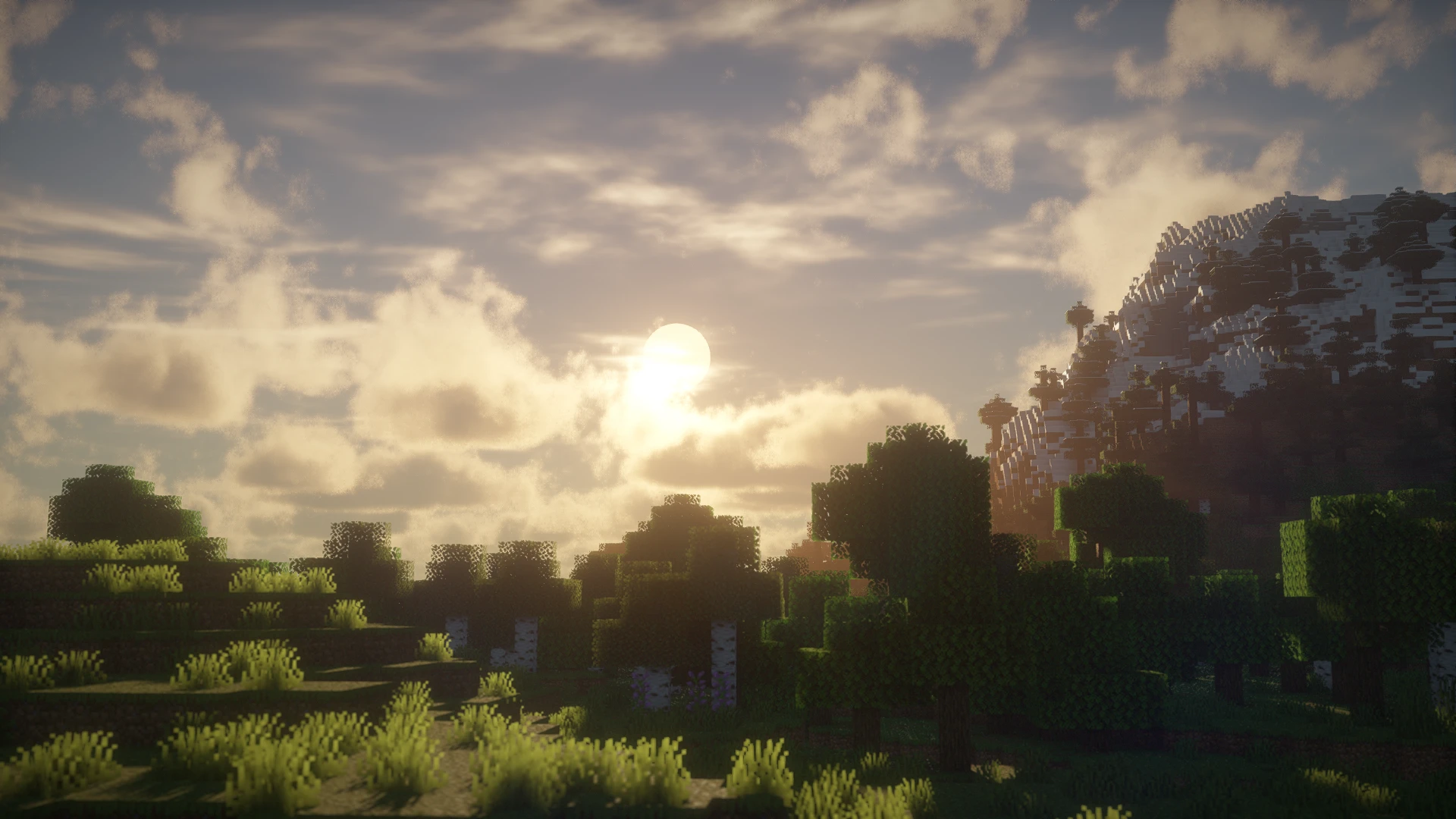
An underrated shader pack that provides insanely good visuals with minimal impact on game performance.
Creators and Publishers

MinecraftStorage
PublisherAdditional Links
You may find some useful information by following these links

https://modrinth.com/shader/reverie_shader
Share this post


Reverie is a relatively new Minecraft shaderpack that provides visuals that are on-par with some of the popular shaderpacks out there. After trying out this pack for the first time, I ended up wondering why Reverie is not very popular. Let us take a look at some of the impressive features of this pack.
Volumetric Clouds
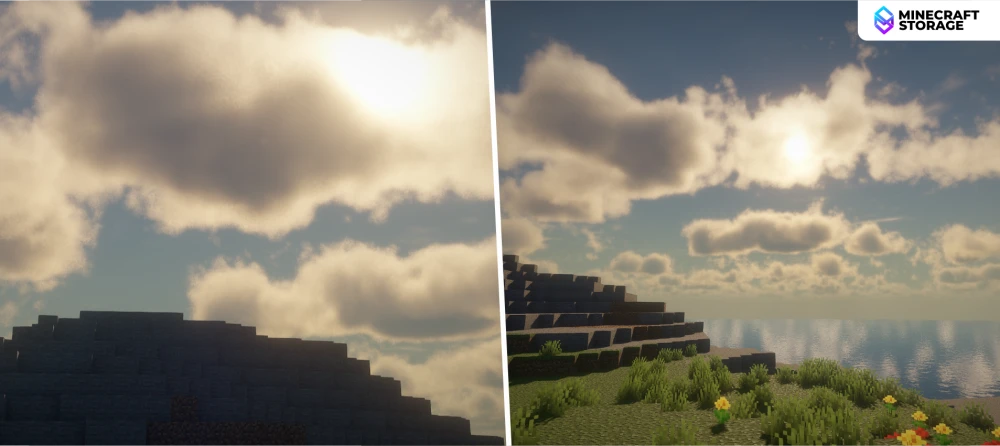
Upon entering a world with Reverie enabled, the clouds will be the first thing you notice. The volumetric clouds introduced by this pack behaves in a very realistic manner. When the clouds cover the sun, the sunlight gets dispersed in a very beautiful way.
Time of Day
The comparison slider above shows the same landscape at daytime and nightime. The terrain becomes noticeably dark and the night sky appears to have a gradient, which will soon darken as midnight appears. The sky also gets filled with stars at night.
PBR Support
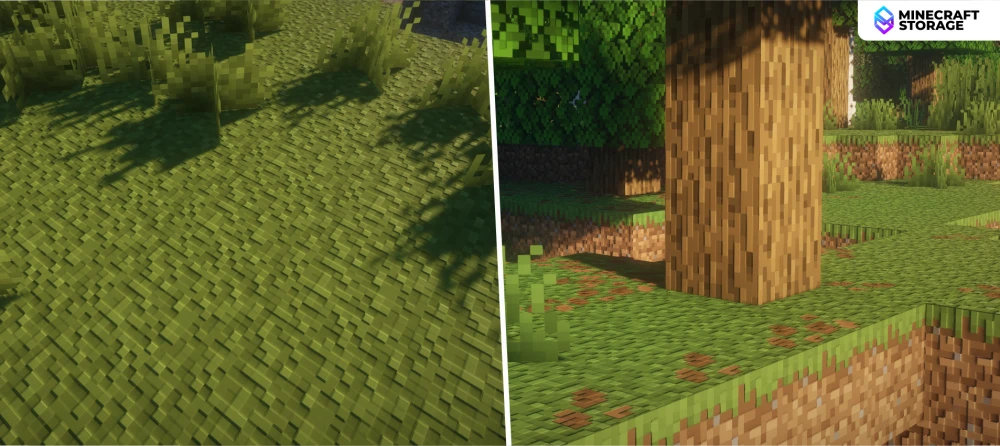
PBR is a feature that makes inter-surface pixels on block surfaces react to light in a realistic manner, enhancing the overall visuals quality. In the image above, you can see how the individual pixels on the block surfaces cast shadows on the block surface itself.
Texture Used: CoffeePBR
Rain and Thunder
The above image compares rain and thunder with Reverie enabled. When it begins to rain, the clouds become much denser, covering a major portion of the sky. During thunderstorms, similar phenomenon can be observed, but the world appears a lot more darker compared to just rain.
Camera Effects
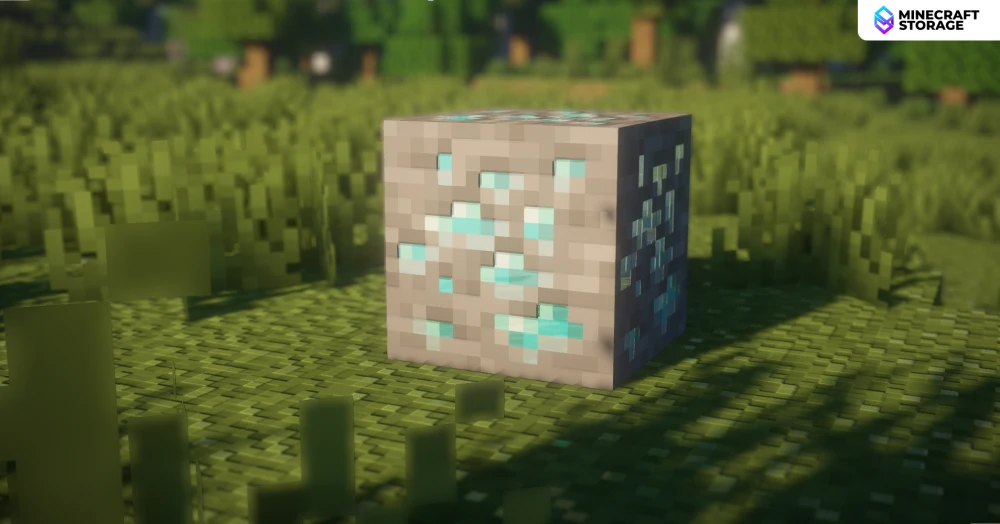
Reverie offers a collection of camera effects like Depth of Field, Motion Blur, etc. which makes it easier to capture beautiful in-game screenshots.
Water Reflection
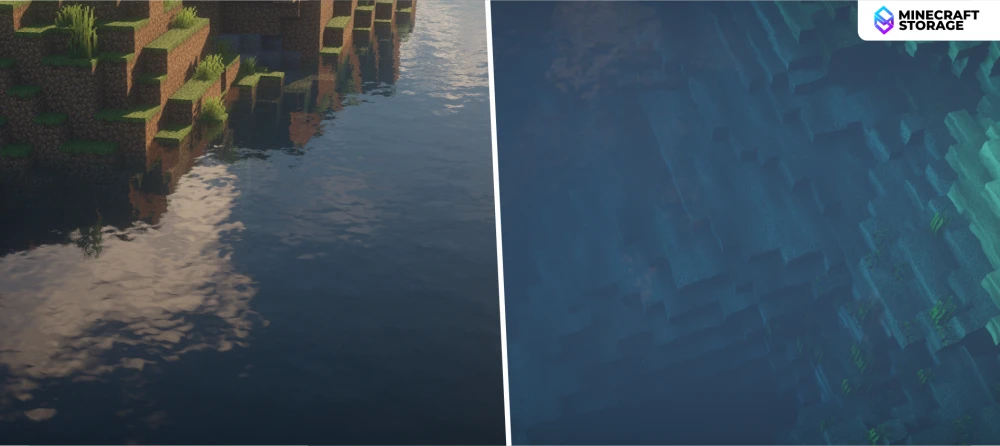
Water surfaces reflect the outer environment very well and the ripples on the water distort these reflections very well. In short, the water in Reverie appears very realistic.
Underwater Effects
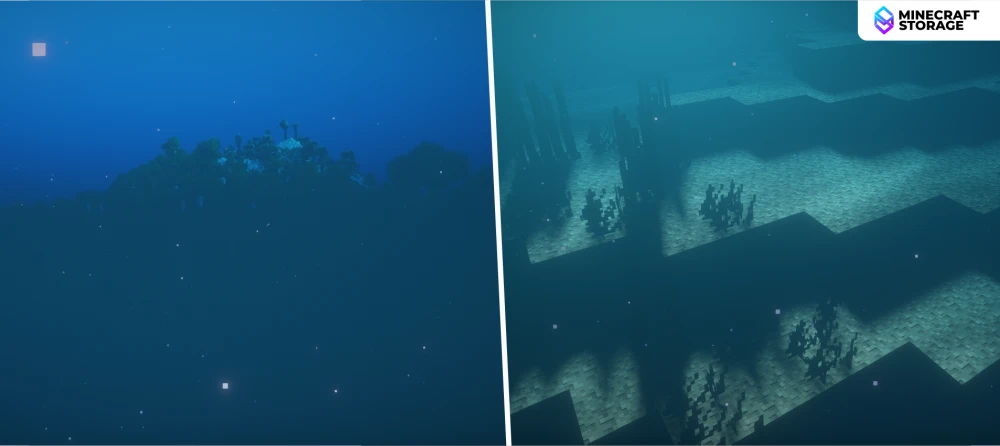
Viewing the outer world from under the water gives you very faded and distorted visuals. When light passes through the water and falls on underwater surfaces, you can notice caustics forming. Caustics are the wave like patterns seen at the bottom of pools and such.
The Nether
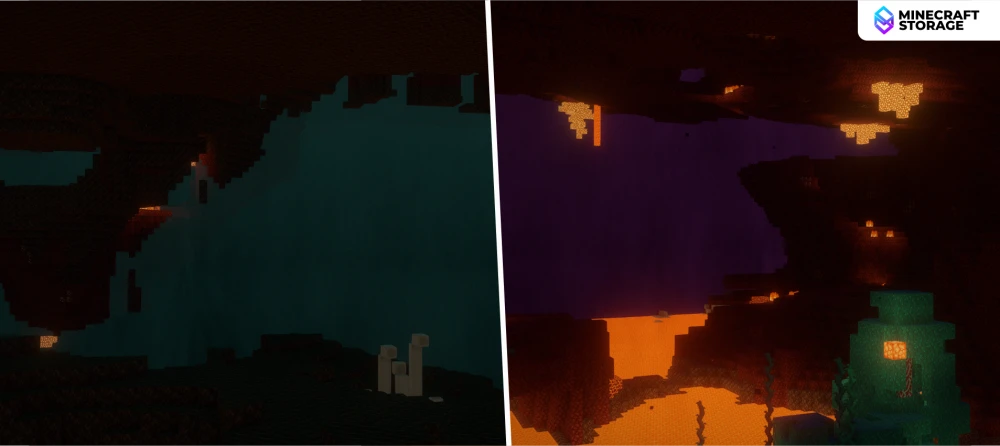
With Reverie, the Nether appears a lot more darker with light sources standing out very well. You can also notice the per-biome fog effects, just like in the vanilla game.
The End
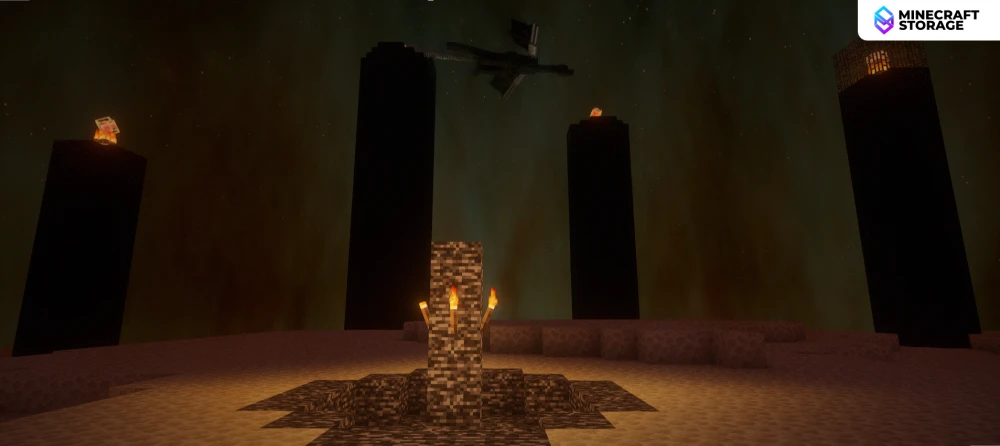
The image above shows the shader effects in the End dimensions. You can notice a thick fog in the distance. This fog is volumetric and will limit your vision if you enter it. From this distance, the fog appears to be some sort of smoke rising from the deep void of the End.
You can see how the End City looks like with Reverie. The last (fifth) image shows an image of End city captured while the player is inside a volumetric fog cloud.
Performance
Performance wise, Reverie is incredibly well optimized. On our testing on a mid-end laptop with AMD Ryzen 5 series processor and AMD Radeon 6500M GPU, the game provided 45-55 FPS. And this is with the High/Ultra preset provided in the shader settings.
If you have device with even lower specs, there is good news for you - The pack even has a toaster preset, and the best part? The lowest "toaster" preset and the highest "ultra" preset looks very similar with not much noticeable difference unless you are specifically looking for issues.
The comparison slider above compared Toaster and Ultra preset. Move the slider and compare for yourself.
Conclusion
Overall, Reverie proves that a shaderpack doesn't need to be widely known to deliver top-tier visuals. From its realistic volumetric clouds and dynamic time-of-day transitions to its detailed PBR surfaces, convincing water reflections, and immersive underwater caustics, Reverie covers nearly every visual aspect that makes Minecraft feel alive. Its attention to detail extends even to the Nether and the End, both of which receive distinct atmospheric touches that enhance their eerie, otherworldly feel. What truly sets Reverie apart, though, is its impressive performance-to-visual ratio — delivering near-identical quality between its lowest and highest presets while running smoothly even on modest hardware. Given all this, Reverie deserves far more recognition than it currently has, and it's well worth trying out for anyone looking to elevate their Minecraft experience without sacrificing performance.
What's Next
